California Banned Plastic Bags… The Industry Made Them Thicker
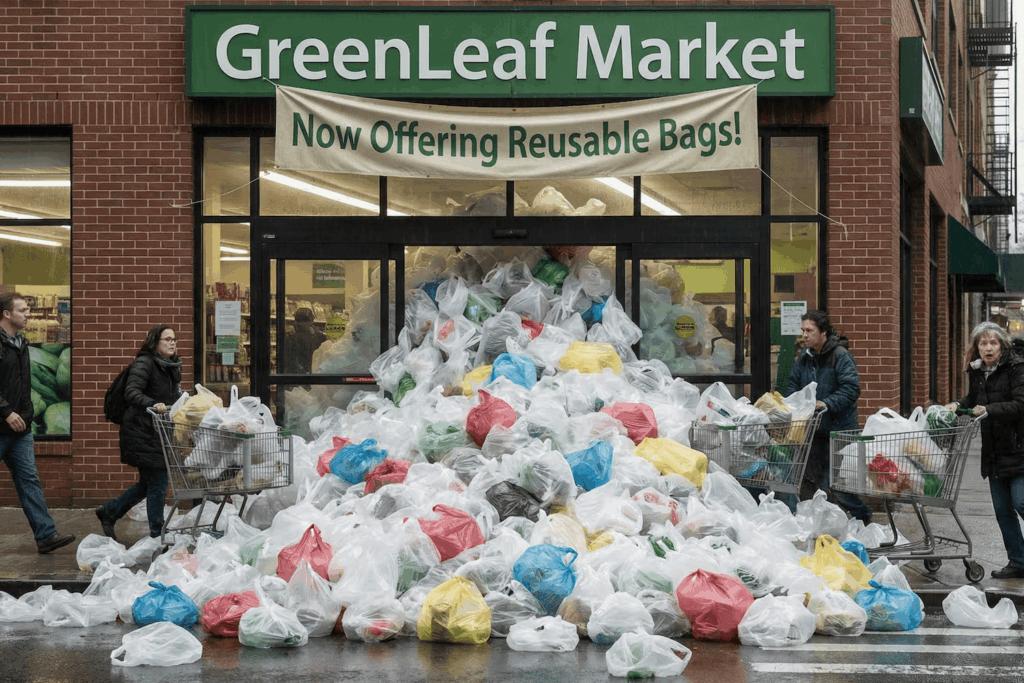
In 2014, California made history. It became the first state in the country to ban single-use plastic bags at grocery store checkouts. Voters affirmed the decision two years later. The message was clear: Californians were done with plastic bags.
There was just one problem… the bags never went away.
Between 2014 and 2022, the amount of plastic bags thrown out by Californians didn’t shrink. It grew – from 157,385 tons the year the ban was passed to 231,072 tons eight years later, a 47% increase. Per capita, the jump was just as bad: from 4.08 tons per 1,000 residents to 5.89 tons per 1,000 residents, according to CalRecycle data reported by the Los Angeles Times. The state’s landmark environmental law hadn’t reduced plastic pollution. It had accelerated it.
The reason was a loophole so simple it barely qualifies as clever. The original law – SB 270, signed in 2014 and upheld by Proposition 67 in 2016 – banned single-use plastic bags. But it allowed stores to sell thicker plastic bags, provided they were labeled “reusable” and met minimum thickness and recyclability requirements. The idea was straightforward: thin disposable bags would disappear, and consumers would transition to durable alternatives they’d bring back to the store.
That’s not what happened.
What “Reusable” Actually Meant
The plastic bag industry didn’t fight the ban by opposing it outright. It fought the ban by complying with it – technically.
Manufacturers started producing bags that met the letter of the law: thicker polyethylene film, stamped with the word “reusable,” sold for ten cents at checkout. They cleared the legal threshold. But these bags weren’t the sturdy totes you buy at Trader Joe’s. They were essentially the same flimsy grocery bags, just slightly thicker – typically around 2.25 mils, compared to about 0.5 mils for the old single-use bags. Four to five times thicker by measurement, but functionally identical in how people used them.
The California Public Interest Research Group (CALPIRG) found that very few consumers ever brought a thick plastic bag back to the store to reuse it. Most people used them once – to carry groceries from the car to the counter – and then threw them out or repurposed them as trash can liners. The bags were “reusable” in the same way a paper plate is washable: technically possible, practically irrelevant.
Recycling wasn’t a realistic option either. Municipal recycling facilities in California don’t accept plastic film bags – they jam sorting equipment and contaminate other recyclable materials. CalRecycle itself acknowledged that “plastic bags aren’t recycled on a large scale in California.” So the thicker bags didn’t get reused, didn’t get recycled, and each one contained more plastic than the thin bags they replaced. The math was never going to work.
The Industry Knew What It Was Doing
The thickness loophole didn’t happen by accident. When California’s original bag ban was being drafted, the question of what counted as “reusable” became the central battleground. Environmental groups wanted a straightforward ban on all bags made of plastic film – thin or thick. The plastics industry pushed for an exemption based on bag thickness, arguing that heavier bags were genuinely reusable and that banning them entirely would eliminate a legitimate product category.
The compromise was the thickness standard: bags above 2.25 mils were classified as reusable and exempted from the ban. But sturdy, durable shopping totes – the kind lawmakers apparently had in mind – are typically 20 mils thick, roughly ten times the threshold that was written into law. The standard was low enough to let bag manufacturers retool production lines with minimal changes, swap in slightly more plastic per bag, and keep selling functionally disposable bags under a new label.
Once California’s framework was in place, it became the template. At least five other states – Connecticut, Maine, Oregon, Rhode Island, and Washington – adopted bag bans with the same thickness exemption. In each case, the result was similar: thicker plastic bags replaced thinner ones, consumers treated them as single-use, and the environmental benefit was muted or nonexistent.
The American Recyclable Plastic Bag Alliance, a trade group representing bag manufacturers, has consistently argued that thicker bags are a legitimate reusable product and that better recycling infrastructure – not outright bans – is the answer. “The reality exists that consumers could take their film bags back to stores, which could then be routed into the existing circular film recycling infrastructure,” the group’s director told Grist in 2024. The problem with that argument is that the infrastructure doesn’t exist at scale, the return rates are negligible, and the group has had a decade to build both.
SB 1053: Closing the Loophole Ten Years Later
In February 2024, California Senator Catherine Blakespear introduced SB 1053 to do what the original law should have done: ban all plastic bags at checkout, regardless of thickness or labeling.
The bill moved quickly. It passed the state Senate in May 2024, cleared the Assembly, and was signed by Governor Gavin Newsom on September 22, 2024. It took effect on January 1, 2026.
Under SB 1053, the rules are now simpler. No plastic carryout bags of any kind may be provided at the point of sale – no exceptions for thickness, no exemptions for “reusable” labeling. Retailers can offer recycled paper bags for a minimum of ten cents, and the fee is mandatory. By January 1, 2028, those paper bags must contain at least 50% post-consumer recycled material, up from the previous 40% threshold. The law still allows plastic bags in limited contexts – protecting a purchased item from damage or contamination, or containing unwrapped food – but the checkout bag loophole is gone.
More than 200 organizations backed the legislation, including the California Grocers Association, Californians Against Waste, CALPIRG, Heal the Bay, the Monterey Bay Aquarium, Ocean Conservancy, Oceana, and the Surfrider Foundation. Senator Blakespear called it a correction that “honors the intent of the original ban on single-use bags enacted 10 years ago.”
The plastics industry objected. The Responsible Recycling Alliance – formed in 2024 by recyclers EFS-Plastics, Merlin Plastics, and PreZero US – lobbied against SB 1053, arguing that banning recycled-content reusable bags would eliminate over 100 million pounds of annual post-consumer resin demand. They advocated for bringing the bags under California’s extended producer responsibility program (SB 54) instead, which would fund collection and recycling infrastructure through producer fees. It was a reasonable-sounding alternative that conveniently allowed thick plastic bags to keep being sold at checkout while the industry worked toward recycling goals it had failed to meet for the previous ten years.
The legislature wasn’t persuaded.
The Damage Report
The numbers tell a clear story. CalRecycle data shows the problem predates the ban but accelerated after it. As far back as 2004, Californians disposed of 147,038 tons of grocery and merchandise bags – roughly 8 pounds per person. By 2021, that figure had risen to 231,072 tons, approximately 11 pounds per person. The spike didn’t slow down after the 2014 ban took effect. It steepened, as thicker bags carrying more plastic per unit replaced the thin ones that were outlawed.
Meanwhile, research published in Science in June 2025 analyzed decades of coastal cleanup data collected by Ocean Conservancy volunteers and found that plastic bag policies do reduce shoreline litter – by 25% to 47% where implemented. But the study also found that partial bans, like California’s original law with its thickness exemption, produced “the smallest and least precise effects.” Full bans and mandatory fees were significantly more effective. The study’s authors specifically noted that exemptions for thicker bags undermine the policy’s intended impact.
The irony is hard to miss. California’s original bag ban did technically reduce the number of thin plastic bags in circulation. But because each replacement bag contained more plastic, the total weight of plastic bag waste increased. The policy didn’t fail because people ignored it. It failed because the industry found a way to comply with the words of the law while defeating its purpose.
The Ripple Effect
California’s experience is now shaping policy in other states. Oregon State Senator Janeen Sollman has announced plans to introduce legislation mirroring SB 1053, after finding that Oregon’s own thickness-based exemption produced the same predictable results. “The plastics industry just went around that, made a thicker bag, and then called it reusable,” Sollman told Grist, “even though that type of bag was ultimately just ending up as another piece of garbage.”
States that moved more recently have been more careful. New York’s bag ban defines a reusable bag as one made from “cloth or machine washable fabric” or “other non-film plastic washable material” – explicitly excluding the thick-film bags that exploited California’s loophole. Colorado, Delaware, New Jersey, and Vermont require reusable bags to have stitched handles, a simple requirement that excludes heat-sealed film bags. Massachusetts, which is still working toward a statewide ban, has drafted language specifying that a reusable bag “shall not include a bag made of plastic film of any thickness” – a direct response to the California precedent.
Environmental groups that spent years negotiating the compromises that created the loophole in the first place are candid about the lesson. “You need a full ban on this stuff completely,” said Jack Egan, vice chair of the Connecticut chapter of the Surfrider Foundation. “Otherwise, you’ve got a compromised, hamstrung, hard-to-enforce, easily worked-around ordinance.”
The Loophole Inside the Fix
SB 1053 was supposed to settle the question. No more plastic bags at checkout, period. But two months after the law took effect, ABC7 News found thick plastic bags still in wide use across San Francisco’s Mission District and Chinatown – legally.
The reason is a provision buried in California’s original 2014 ban that SB 1053 left intact: any city or county that passed its own plastic bag ordinance before September 2014 gets to keep its local rules. San Francisco banned thin single-use bags back in 2007, making it one of the earliest adopters in the country. But its pre-2014 ordinance still allows the thicker bags that SB 1053 was specifically designed to eliminate. Because the state law doesn’t preempt those older local ordinances, the city’s weaker rules remain in effect.
San Francisco isn’t alone. According to the San Francisco Environment Department, roughly 80% of Bay Area cities passed local bag ordinances before the 2014 cutoff – meaning the thick “recyclable” bags remain legal across most of the region. Closing the gap would require each city to individually amend its own ordinance through a local legislative process. As of March 2026, San Francisco hasn’t started that process. At least one supervisor, Matt Dorsey, told ABC7 he isn’t ready to put additional pressure on small businesses during what he described as a fragile economic recovery.
Meanwhile, California Attorney General Rob Bonta has sued seven plastic bag manufacturers, alleging that their bags were labeled as “recyclable” despite not being recyclable in practice. The lawsuit targets the labeling claims directly – a separate front in the same war.
The pattern is hard to miss. A decade-old loophole gets closed, and a new one is already visible in the seams of the fix.
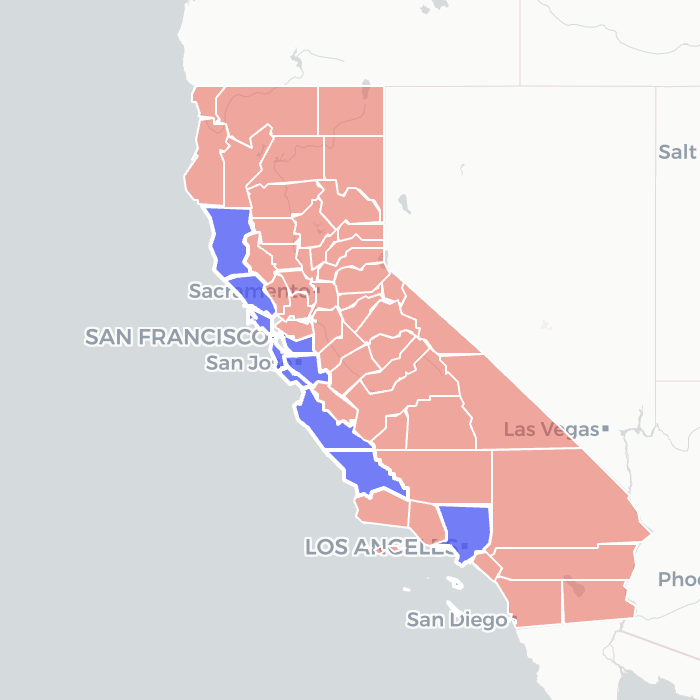
Which counties still have the loophole?
Explore the map to see where thick plastic bags may still be legal under the pre-2014 exemption.
View Interactive MapWhat This Actually Tells Us
The California bag loophole is a case study in how well-intentioned legislation can be neutralized by the industries it targets – not through defiance, but through compliance that subverts the law’s purpose. The playbook is straightforward: accept the regulation, meet the literal requirements, and find the space between what the law says and what it means.
It’s also a reminder that loopholes don’t close themselves. California’s original bag ban was passed in 2014. The waste data showing it wasn’t working has been available for years. Environmental groups identified the problem almost immediately. And yet it took a full decade – until SB 1053 was signed in September 2024 – to fix a loophole that was obvious to anyone paying attention. Political fatigue, industry lobbying, and the sheer complexity of legislative processes meant that a straightforward correction took ten years to achieve. And even now, the fix has gaps – cities with pre-2014 ordinances remain exempt, keeping thick plastic bags legal in some of the state’s most populated areas.
The good news is that when loopholes are identified and clearly documented, they eventually do get closed. California’s fix is now the model for other states. The Science study confirming that full bans outperform partial ones gives policymakers the evidence base to reject future thickness exemptions. And the plastics industry’s core argument – that better recycling infrastructure is the answer – grows less convincing each year it goes unbuilt.
SB 1053 took effect on January 1, 2026. If you’ve shopped at a California grocery store recently, you may have noticed the change – unless you’re in one of the cities where the old rules still apply. The question was supposed to be “paper or your own bag.” In some places, it still isn’t.
It only took a decade… and it still isn’t finished.
Loophole does not provide legal services or advice. For legal disputes, consult a licensed attorney.